Grade a driveway or level a pad without wrecking the yard
A mini skid steer spreads gravel, cuts down high spots, fills ruts, and leaves a driveway or building pad flat and firm, all on rubber tracks that will not chew up the grass on the way in.
What the job involves
Grading is some of the most satisfying work a mini skid steer does, and some of the most common. Regrading a washboarded gravel driveway, spreading a fresh load of crushed concrete or millings, leveling a pad for a shed, garage, pole barn, or above-ground pool, filling low spots that pond after a Florida downpour, and cutting a gentle slope so water runs away from the house instead of toward it.
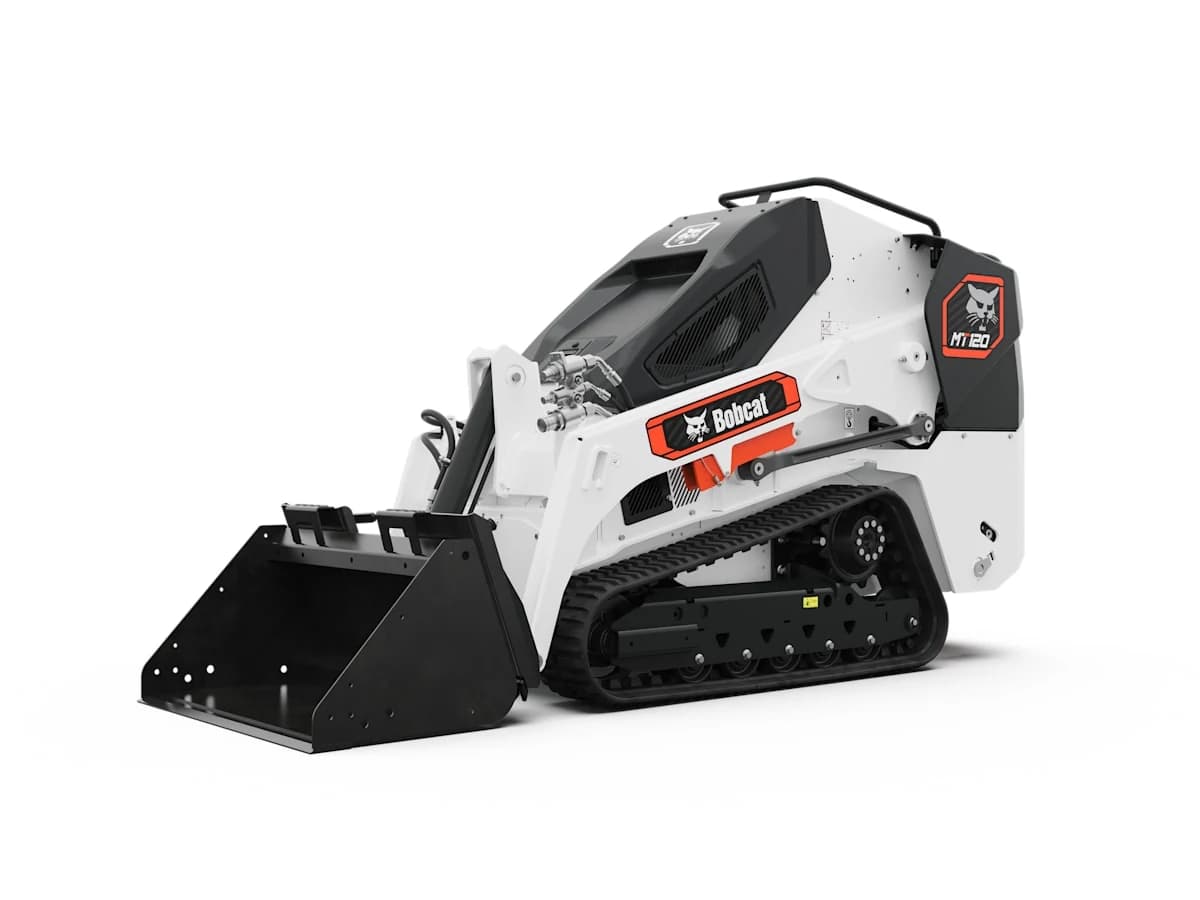
The Bobcat MT-120 does this with a bucket by carrying material from the pile, dumping it where it is short, and then backdragging the surface flat on the way back. Because it rides on rubber tracks, it floats over turf and soft ground far better than a wheeled machine, so you can cross a lawn to reach a backyard pad without leaving ruts behind.
For a homeowner, that means a graded driveway or a dead-flat pad in an afternoon instead of a weekend of wheelbarrow trips and a bent rake. For a contractor, it means pad prep that is ready for forms, gravel, or sod without a second machine on site.
Bobcat MT-120 Mini Skid Steer
The heart of our fleet. A versatile mini track loader that fits through a standard gate yet lifts 1,200 lbs. Ideal for landscaping, hardscaping, land clearing, and material handling on tight residential job sites. Swaps attachments in seconds.
Recommended attachments for this job
What to expect on the job
Set your grade and find the low spots
Eyeball or string-line the finished height you want. Note where water pools after rain, those are your low spots to fill, and where the surface crowns too high.
Move and spread material
Carry gravel, millings, or dirt from the pile with the bucket and dump it across the low areas. A little at a time spreads more evenly than one big dump.
Backdrag to level
With the bucket flat, drive backward dragging the cutting edge across the surface. This is the move that turns a rough pile into a flat, even grade. Repeat until it is smooth.
Compact and check the fall
Drive over the finished surface to firm it up and confirm it drains away from structures. For a driveway, a slight crown sheds water and keeps it from washing out.
Rough time and cost
The standard bucket is included with the machine, so a straightforward grading job is just the $320 day rate, tax and damage waiver included, with a full 24 hours to work.
Questions we get on this job
How much gravel do I need?
A rough rule: a cubic yard of gravel covers about 100 square feet at three inches deep. Measure your length by width, and order a little extra, running short mid-job is the most common grading headache.
Will the tracks tear up my lawn crossing to the backyard?
Far less than tires. Rubber tracks spread the weight out, and the trick is to avoid pivoting in place. Make wide, rolling turns or a three-point turn and the grass usually recovers fine.
Can I do a driveway that drains properly?
Yes. Build in a slight crown down the center or a gentle slope to one side so water sheets off instead of pooling. Backdragging lets you feather the surface to hold that fall.
Related projects
Ready to tackle grading & leveling?
Rent the Bobcat MT-120 online in about 60 seconds, or call. Free yard pickup 24/7, or delivery from $150.